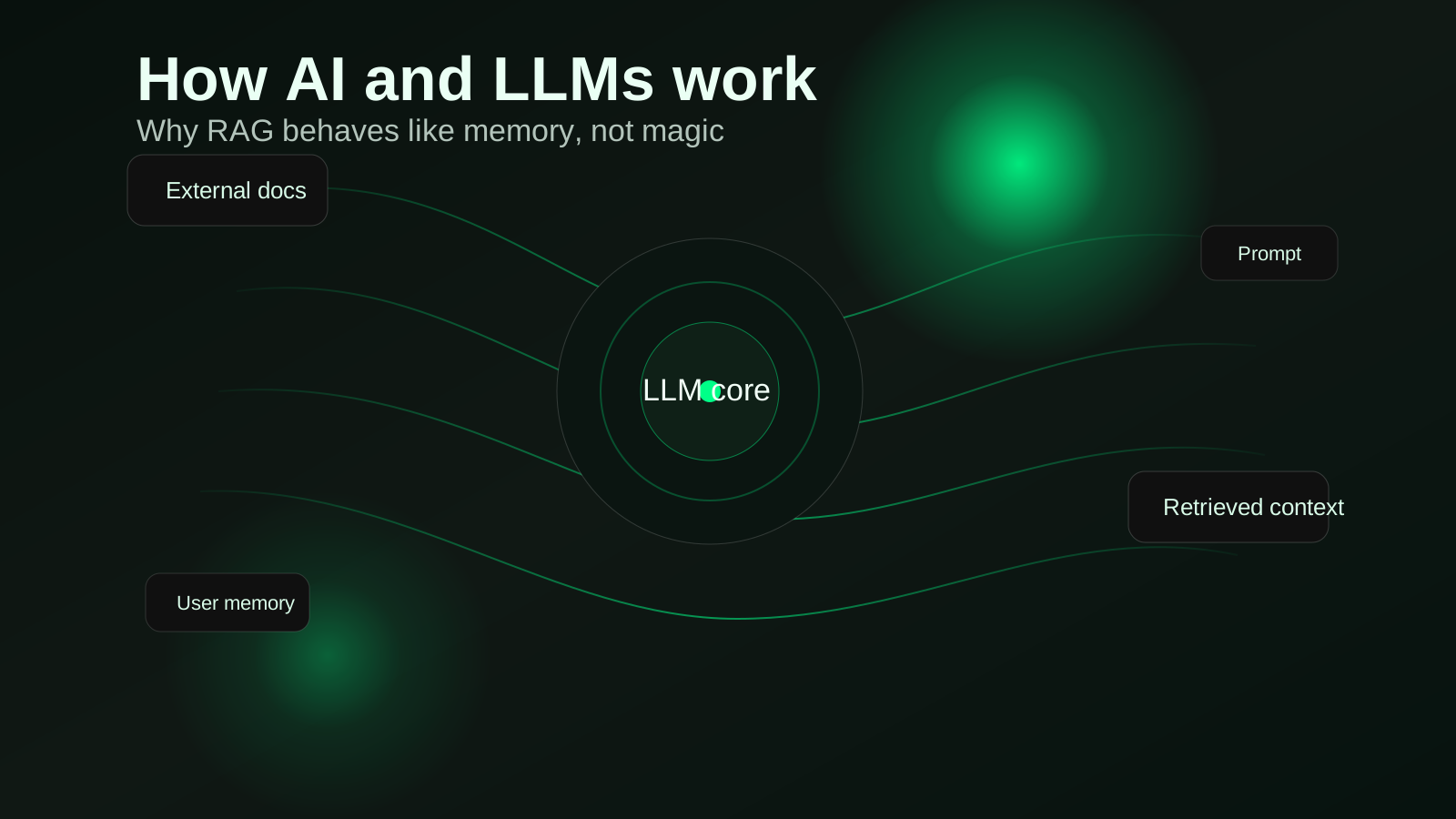
The shortest honest explanation is this: an LLM is a prediction engine for language. It reads a sequence of tokens, estimates what should come next, and keeps doing that fast enough to feel conversational.
That means the model is not opening a secret folder of facts every time you ask a question. It is generating an answer from patterns it compressed during training, plus whatever context you provide in the current prompt.
This is why LLMs can sound brilliant and still be wrong. Fluency is not the same thing as grounded knowledge. A model can produce coherent language even when the answer is missing, outdated, or only partially supported.
Why prompts matter so much
The prompt is the model's current working environment. Instructions, examples, tone, constraints, prior messages, and retrieved documents all live there. The model will answer from that temporary window of information. If the right context is missing, the answer quality drops even if the model itself is strong.
Most teams over-focus on model size and under-focus on context design. In practice, the better system often wins because it frames the task better, limits ambiguity, and grounds the response against real source material.
Why grounded systems beat generic chat
If you want AI agents that can support sales, service desks, MSP operations, or internal teams, you need more than a strong model. You need retrieval, permissions, fresh knowledge, and clean orchestration around the model.
The value does not come from "having AI." It comes from connecting the model to the right business context and constraining how it acts.