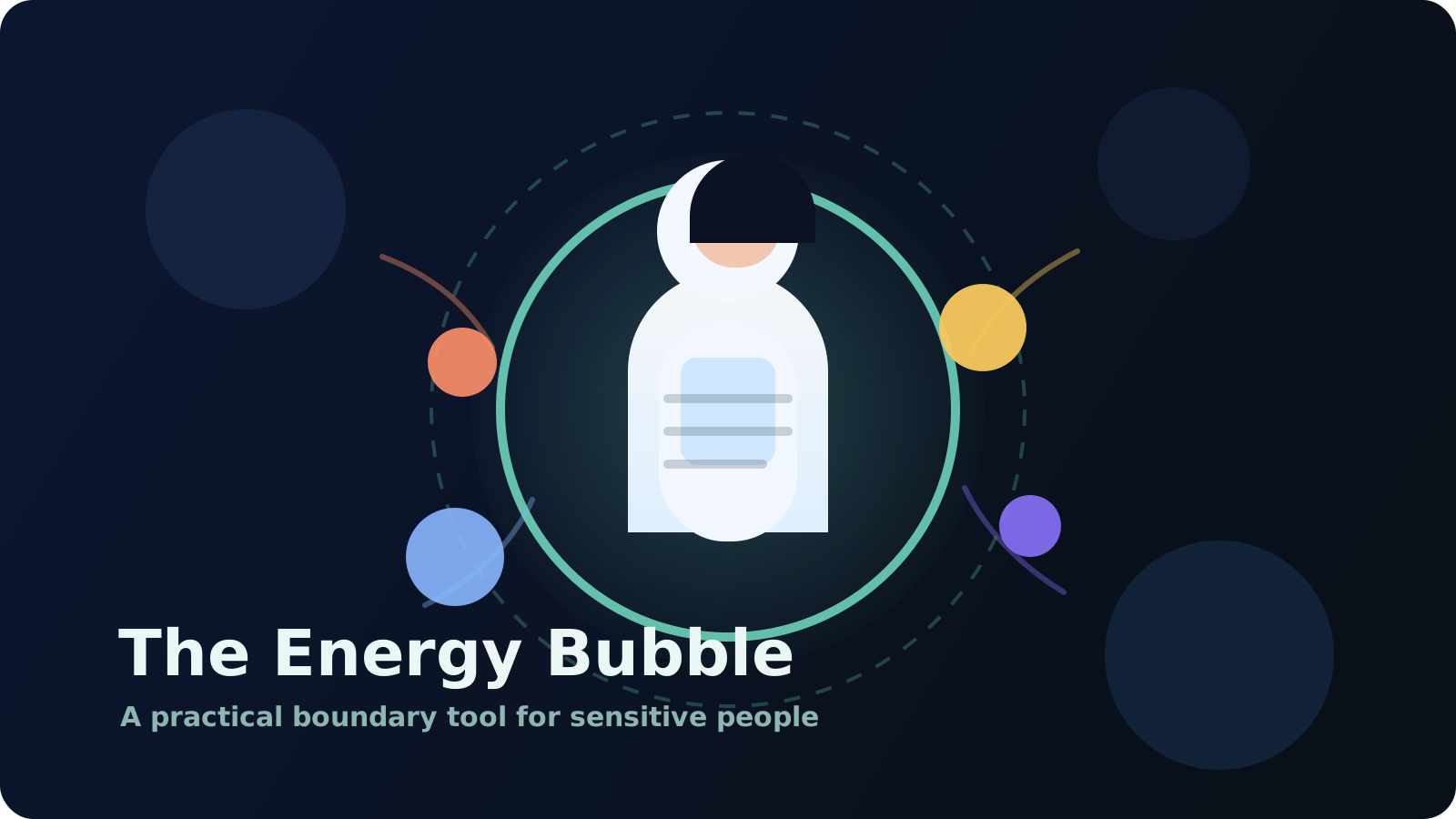
The Energy Bubble: a practical boundary tool for sensitive people.
I’ve always been wary of anything that sounds too “woo.” If a technique can’t survive real life, then it’s not a technique, it’s a vibe. The Energy Bubble interested me because even without buying the mystical framing, the underlying mechanics line up with attention, regulation, and emotional boundaries.
Apr 11, 20268 min readBoundary Practice
Whether you personally relate to Rejection Sensitive Dysphoria or just know the feeling of being “too sensitive,” the problem is familiar: you walk into a room and come out feeling like you’ve been living someone else’s emotional weather.
The Energy Bubble practice is presented as a way to create an energetic boundary so you can stay present with people without dissolving into them. In my view, even if you do not use the word “energy,” the method still has practical value because it creates a felt boundary before the situation starts pulling at you.
What the Energy Bubble is
The practice is a short visualization to do before situations where you usually feel drained, flooded, or emotionally over-responsible.
1. Breathe Close your eyes and take a few slow, deep breaths.
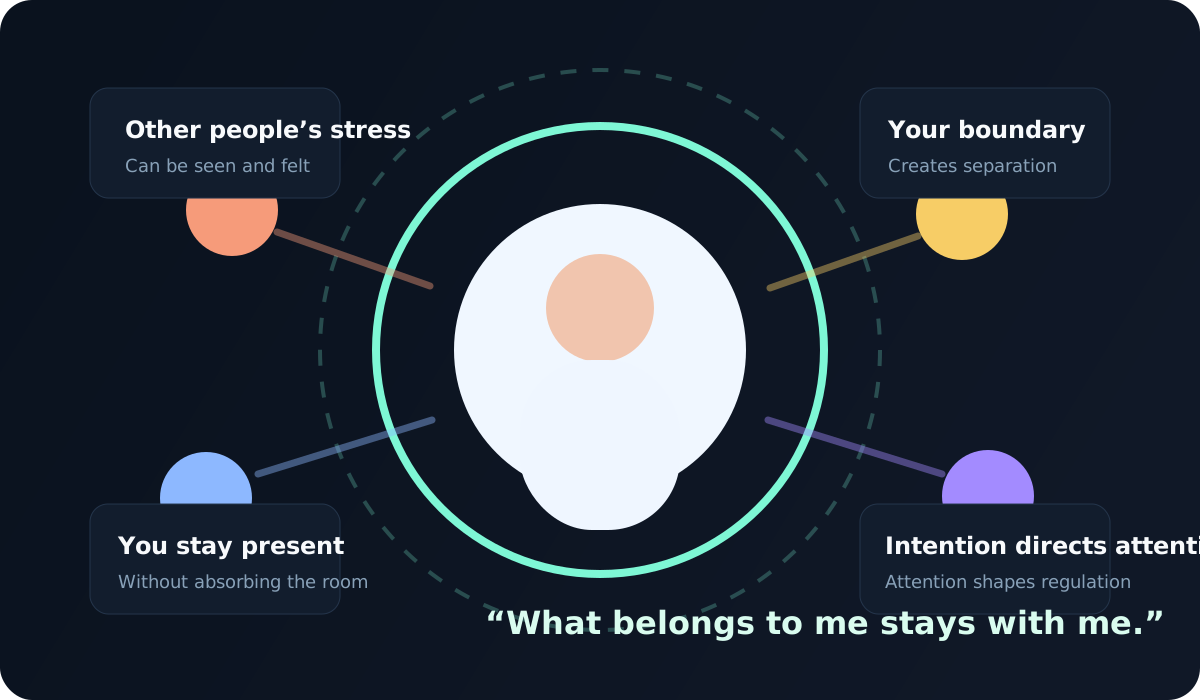
2. Visualize Imagine a sphere of light around your body, about an arm’s length in every direction.
3. Choose a tone Let a colour or feeling emerge. There is no “correct” choice.
4. Set intention Decide clearly what the boundary allows in and what it keeps out.
Simple examples
“I can be present and loving without feeling responsible for everyone else’s unresolved feelings.”
“I engage fully and leave with my own energy intact.”
That is the whole practice: breath, imagery, intention, then open your eyes and walk in.
Why I think it works
My view is that the mechanism is not mystical. It is directional. The practice points the mind and body in a different direction before you enter a space where you usually over-absorb.
It interrupts emotional contagion
You still notice other people’s mood, but the bubble gives you a mental separator: their stress can exist without automatically becoming yours.
It changes physiology first
Slow breathing and body-awareness help regulate state before you try to solve the moment with thoughts alone.
It gives the brain a vivid boundary
If your nervous system is trained to scan and manage other people, imagery can act like a rehearsal for a different default.
The practical distinction is not “nothing affects me.” It is “I can notice what is around me without fusing with it.”
Where I think this helps most
Before high-contact interactions
Sales calls, stakeholder meetings, difficult conversations, or any place where other people’s urgency becomes your urgency.
For people who over-function emotionally
The ones who walk into a room and start stabilising it without being asked.
For anyone whose old survival strategy was adaptation
If staying safe once meant constantly adjusting yourself, then holding space around yourself is a meaningful shift.
The version I would actually recommend trying
If you want the shortest version that still feels useful, do this:
Three slow breaths
Visualise the sphere, arm’s length
Use one sentence “What belongs to me stays with me. What doesn’t belong to me doesn’t enter.”
Then walk in. Not to block people out. Not to numb yourself. Just to stay you while you’re with them.
My bottom line
You do not have to believe in energy to benefit from the Energy Bubble. In my opinion, it works well as a boundary primer: a fast way to regulate, refocus, and stop unconsciously absorbing the room.
If you have been told you are “too sensitive,” I do not think the goal is to become less sensitive. I think the goal is to become less permeable.
Share This Article
Send it to someone who feels everything in the room a little too much.